

If your organization is B Corp Certified, follows ISO 14001, or has committed to Science Based Targets (SBTi), congratulations: you are already ahead of 90% of the market. You’ve done the hard work of auditing your supply chain, fair pay, and office carbon footprint.
But here is a difficult question: Does any of that actually help your developers write more efficient code?
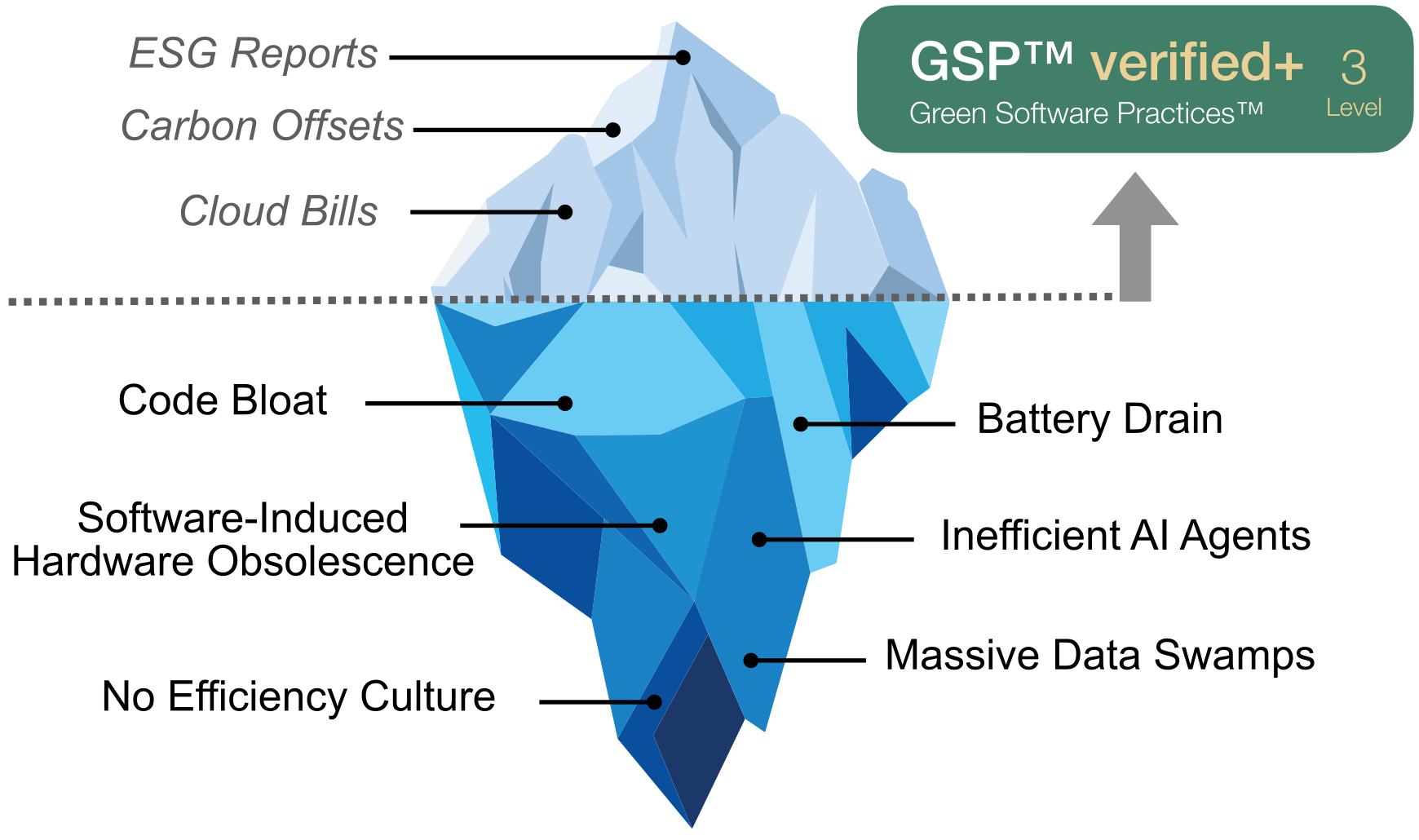
Usually, the answer is no. Most sustainability standards stop at the office door or the cloud bill. They treat “Environmental Impact” as an accounting problem to be solved by the ESG team, not a design problem to be solved by the Engineering team.
That is why we created Green Software Practices™ (GSP). It doesn’t replace your current certifications. It empowers your dev teams to actually meet the goals those certifications set.
The Sustainability Stack: Where GSP Fits
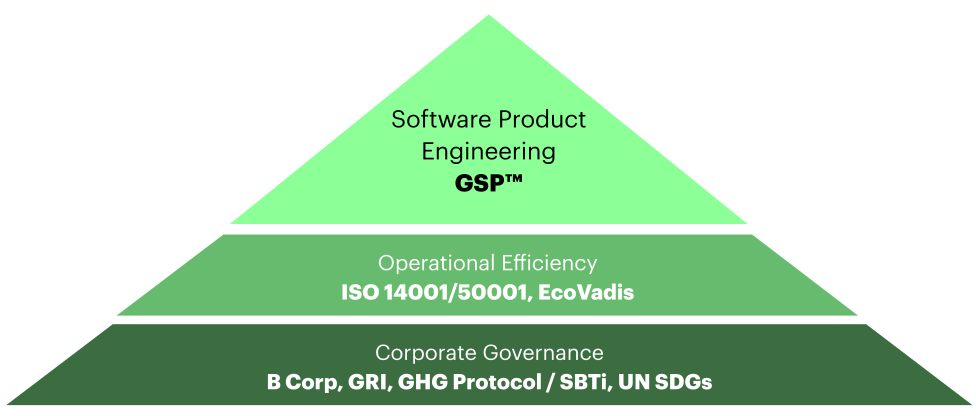
Think of your sustainability efforts like a software stack.
-
The Macro Layer (B Corp, EcoVadis): Focuses on Who you are as a company (Ethics, Governance).
-
The Operational Layer (ISO 14001/50001): Focuses on How you run your business (Waste, Facility energy).
-
The Engineering Layer (GSP™): Focuses on What you actually build (Code efficiency, Architecture).
Without the Engineering Layer, you have a “Green Company” building “Grey Software.”
How GSP™ Compares to Existing Standards
| Standard / Certification | Primary Focus | The Software “Blind Spot” | How GSP™ Completes the Picture |
|---|---|---|---|
| B Corp | Holistic social and environmental ethics. | Focuses on corporate policy, not the resource impact of the product. | Translates “Environmental Stewardship” into technical design and PRs. |
| ISO 14001 | Environmental Management Systems (EMS). | Focuses on administrative processes; silent on code bloat or CPU waste. | Provides the technical “how-to” for environmental goals in a DevOps context. |
| ISO 50001 | Energy Management Systems. | Optimizes facilities and hardware; ignores the efficiency of the logic running on them. | Targets the “Logic Layer” optimizing the software that triggers the energy draw. |
| EcoVadis | Sustainability ratings for global supply chains. | Assesses vendor policies; rarely audits the resource efficiency of the software delivered. | Proves product-level efficiency through the Measurement & Observability pillar. |
| GHG Protocol / SBTi | Carbon footprinting and science-based targets. | Retrospective accounting; doesn’t offer a roadmap for engineering-led reduction. | Acts as the proactive engine that reduces emissions before they are reported. |
| GRI Standards | Public transparency and reporting. | Reporting-centric; doesn’t provide a framework for building low-impact systems. | Offers the systematic practices needed to generate meaningful, engineering-driven metrics. |
Empowerment, Not Just Compliance
Unlike generic standards, GSP™ was built for the Software Development Life Cycle (SDLC). It focuses on five categories that turn “Sustainability” into a “Technical Requirement”:
Governance & Culture: Moving sustainability from the ESG spreadsheet to the Definition of Done (DoD).
Training & Knowledge: Empowering engineers with the specific “Green Coding” skills they didn’t learn in university.
Measurement & Observability: Transitioning from “estimated carbon” to real-time resource attribution for every microservice.
Software & Architecture Practices: Designing systems that are “carbon-aware” and respect the hardware they run on.
Improvement & Learning: Creating a feedback loop where efficiency gains are shared and celebrated across the org.
Most sustainability standards feel like a “tax”: extra work for the sake of compliance. GSP™ is different. When a developer optimizes an AI model to use 30% less memory, or refactors an API to reduce network chatter, they aren’t just “being green”. They are building higher-quality, lower-latency, more resilient software.
While the rest of the industry is arguing over how to buy enough carbon offsets to cover their waste, GSP™ focuses on what really matters: Systematic Waste Prevention. By adopting the Green Software Practices™, you are signaling that your commitment to the planet isn’t just a badge on your website, but it’s rather written into your source code.
Check out the full Green Software Practices™ framework and see how we can help you close the gap between your ESG reports and your production environment.
Closing Remark
The reality is that most sustainability certifications tell the world you are a responsible company, but they don’t give your developers the tools to build responsible products.
At GreenSeal.dev, we believe sustainability shouldn’t be a top-down mandate. It should be an engineering discipline. Green Software Practices™ complements your existing ISO or B Corp journey by providing the ‘how’ to their ‘why.’ It turns abstract environmental goals into concrete architectural decisions, empowering your team to build systems that aren’t just ‘green’ on paper, but resource-efficient by design.
Stop just reporting your impact. Start engineering it.

